


Recently, I attended the inaugural Fly Pinay Leadership Summit for the LEAD Filipino Texas chapter. I’ve worked in the pro-democracy space doing research on voter turnout and opinions for about six years, and I’d never been in a room with so many Filipino Americans dedicated to civic engagement. It was a group of people who understood that Filipino Americans have had to fight—even die—for the dignity of democratic and economic inclusion in the United States. Pro-democracy researchers rarely anchor their research questions, interpretations, or recommendations around the expertise of this community.
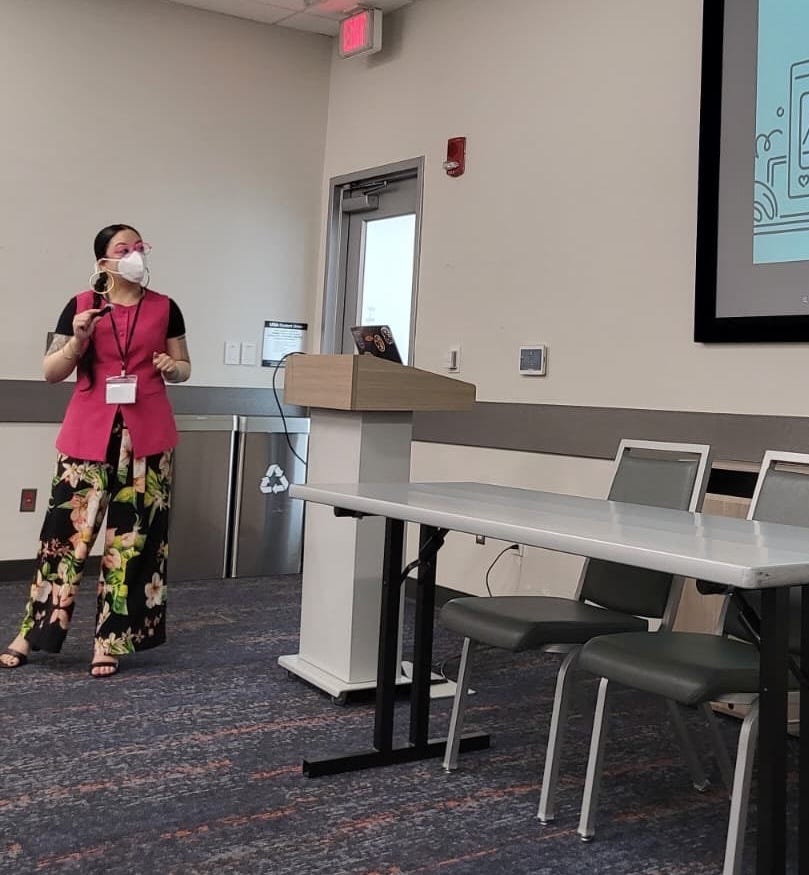
Me at the LEAD Filipino Texas Fly Pinay Leadership Summit holding a workshop on Protecting Pamilya From Mis/Disinformation. I’m holding a small microphone and looking at a projection screen, and wearing black pants with a floral print, a pink vest and black t-shirt, pink eyeglasses, and a Zimi Air KN95 mask.
Just two years ago, white-led organizations urgently called on voters to “save democracy.” This call assumed that democracy was a universal condition. Democracy for Filipino Americans has never been, and is not, given.
Filipino Americans descend from people who fought against Spanish and American colonization; fought with the United States in WWII for the unfulfilled promise of citizenship; and organized labor strikes in the 1960s under the threat of white mob violence for dancing with white women. Filipino Americans were subjected to segregation from white America: bans on interracial marriage, racially restrictive covenants, and businesses that refused their patronage. Today, civic engagement groups like LEAD Filipino offer Filipinx studies curriculum to help build Filipino American political power.
When the white-led civic engagement space neglects research with and for communities that have these experiences, the ecosystem invests in messaging frameworks and mobilization tactics that assume all communities experience American democracy the same. In fact, Filipino Americans were more likely than all other Asian American groups to be very concerned about election violence and being prevented from voting in 2024. After the election, leaders across the space had to explain where we failed to “save democracy.”
Executive leadership in research organizations holds authority over the underlying assumptions in research priorities and design. Governance established before execution mitigates the risk that research is misaligned with democratic realities.